



Nucleoplasty: What is it?
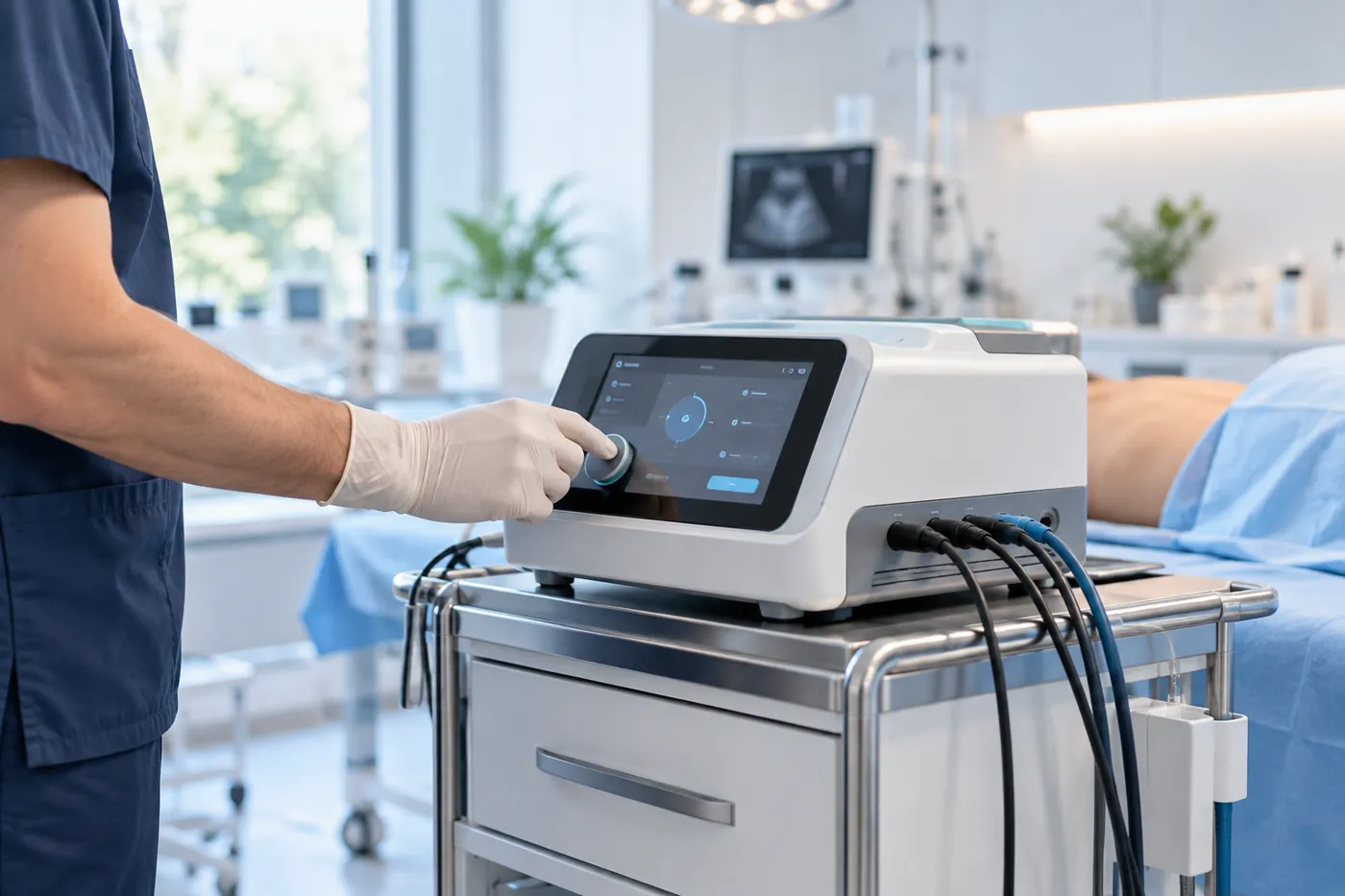
Under fluoroscopy, a fine needle is guided into the centre of the disc. Low-temperature radiofrequency energy (coblation) removes a small amount of nucleus tissue, lowering pressure inside the disc and easing the pressure of the herniation on the nerve.
Who it’s for
- Contained lumbar herniation
- Contained cervical herniation
- Pain radiating to the leg or arm
- No relief after 6+ weeks of medication and physio
- Disc height largely preserved
Before the procedure
Bring MRI or CT scans from the past year (disc and report).
Always tell us if you take them. Your doctor decides whether to pause them; do not stop on your own.
If sedation is planned, do not eat for the time you are told.
Come with someone who can take you home; do not drive.
Wear loose clothes that give easy access to the treatment area.
Tell us in advance about possible pregnancy, diabetes, allergies or a pacemaker.
How it’s done
- 1Positioning
Face down for the lower back, face up for the neck.
- 2Numbing
Skin and needle path are numbed with local anaesthetic.
- 3Placement
The needle is placed into the disc centre under fluoroscopy.
- 4Decompression
A few channels are made with coblation, then the needle is removed.
After the procedure
First days
Mild soreness at the needle site for a few days; short walks are encouraged.
Gradual effect
For most patients relief builds gradually over a few weeks.
Heavy lifting
Heavy lifting and strenuous sport are usually avoided for 2–4 weeks.
Not suitable for
Sequestered fragments, severe spinal stenosis or marked disc collapse.
Risks and side effects
Like any medical procedure, this treatment has possible side effects. Most are mild and temporary; you receive detailed information and give written consent beforehand.
Tenderness at the needle site for a few days; pain may briefly increase in the first days.
Disc infection (discitis), bleeding or nerve injury. Sterile technique and imaging keep these risks low.
Uncontrolled bleeding disorder, active infection, pregnancy, or a sequestered fragment.
Questions
Does the herniation disappear?
The aim is to reduce pressure on the nerve and the pain, not to erase the herniation. It may still show on a follow-up MRI.
Can I still have surgery later?
Yes. Nucleoplasty does not prevent future surgery.
Information on this site is for general guidance and does not replace a medical examination.